Illuminating Success: A Practical Guide for Greenhouse Growers on Selecting Plant Lights
Illuminating Success: A Practical Guide for Greenhouse Growers on Selecting Plant Lights
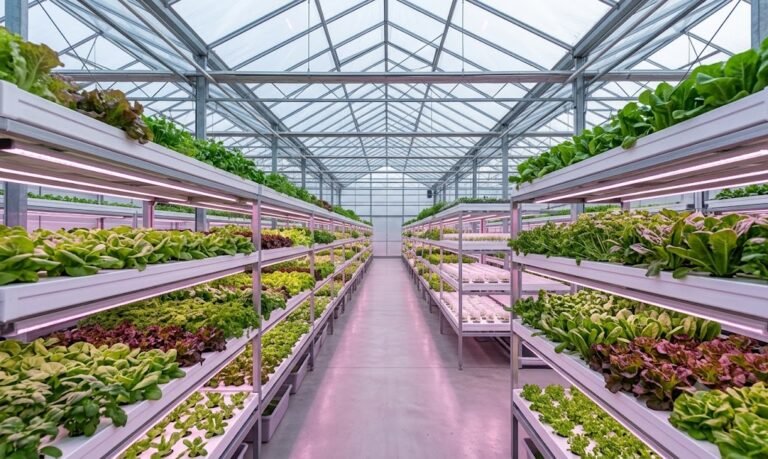
As winter’s grip tightens and daylight hours shrink, greenhouse operators face an annual challenge: how to keep crops productive without letting energy bills spiral out of control. The sun’s angle drops, cloud cover persists, and the Daily Light Integral (DLI) —the total amount of photosynthetically active radiation (PAR) plants receive each day—plummets -3. For a grower, this isn’t just a meteorological event; it’s a financial calculation. Choosing the right supplemental lighting is no longer just about flipping a switch; it’s about strategic investment, biological understanding, and operational precision.
Whether you are growing culinary herbs, leafy greens, or bedding plants, selecting a lighting system requires navigating a complex web of science, economics, and technology. This guide breaks down the essential factors every greenhouse grower should consider to make an informed decision.
1. Start with the Plant: Defining Your Light Target
The first and most critical step in selecting a light is understanding exactly what your crop needs. Light is food for plants, and just like humans, different plants have different appetites. Leafy greens like lettuce typically require a DLI of 10-17 mol/m²/day, while fruiting crops like tomatoes need significantly more, ranging from 20-50 mol/m²/day -4.
To determine your target, you must calculate the “light gap.” This involves measuring the amount of natural light your greenhouse receives during the darkest production months and subtracting it from your crop’s target DLI -3-4. For instance, a herb grower in Michigan might find their greenhouse receives only 5 mol/m²/day in winter. To hit an optimum target of 17 mol/m²/day for basil, they need to deliver an additional 12 mol/m²/day from their LED fixtures -4.
This calculation prevents the common mistake of “over-lighting”—installing a system far more powerful (and expensive) than necessary. Once you know the required DLI from lights, you can determine the necessary Photosynthetic Photon Flux Density (PPFD) , measured in µmol/m²/s, based on how many hours per day you plan to run the lights -4.
2. Intensity vs. Spectrum: The Dynamic Duo
Once considered a futuristic luxury, spectrum control is now a mainstream tool for influencing plant shape, flavor, and efficiency.
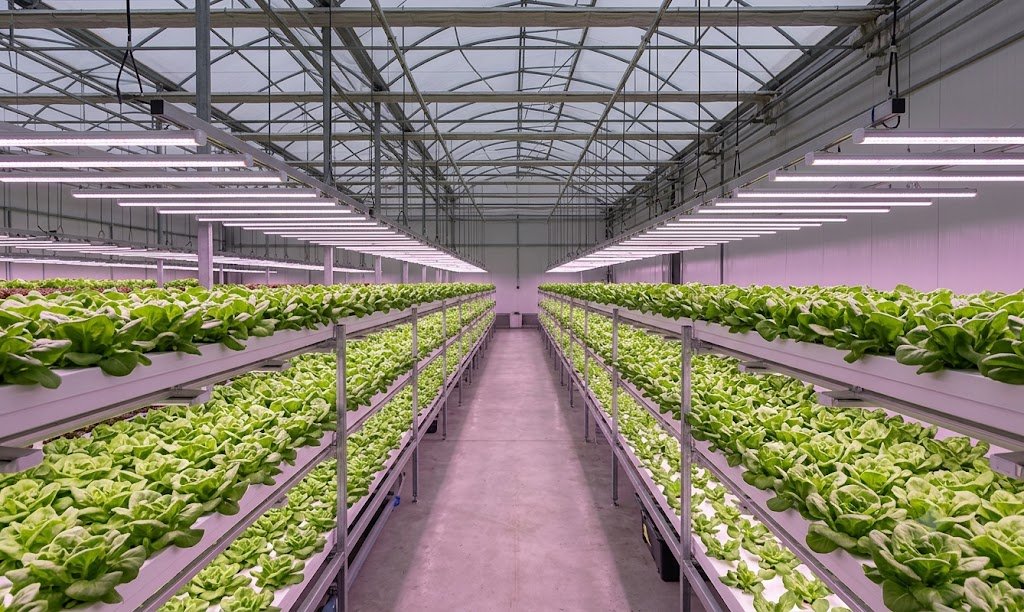
• Intensity (PPFD & DLI): This is the non-negotiable foundation. Without sufficient light intensity, photosynthesis slows to a crawl. Too little light results in leggy growth, delayed flowering, and increased susceptibility to pests and disease -3. High-intensity discharge (HID) lights, particularly high-pressure sodium (HPS), have been the workhorse of the industry for decades, but they are incredibly inefficient. For every watt of power going into an HPS fixture, less than 40% is converted into light usable by plants; the rest is lost as heat -9. LEDs flip this ratio, offering efficacies upwards of 3.9 to 4.3 µmol/J , allowing growers to deliver more light to the crop for significantly less electricity -2-7.
• Spectrum (The Light Recipe): While intensity drives photosynthesis, the spectrum (the color of the light) directs plant development. Blue light (400-500 nm) promotes compact growth and strong root systems, making it ideal for seedlings. Red light (600-700 nm) is highly efficient for driving photosynthesis and stimulates flowering and fruiting -6-10.
Modern LED technology allows for “tuning” these wavelengths. For example, a grower can use a higher percentage of blue light (10-15%) to keep basil bushy and enhance its aromatic flavor compounds -6. The introduction of 4-channel fixtures (red, blue, white, and far-red) gives growers unprecedented control, allowing them to apply specific treatments—like end-of-day far-red lighting to manage stem elongation—without manual intervention -2.
3. The LED Transition: Managing the “Heat Myth”
A major concern for growers transitioning from HPS to LED is the loss of radiant heat. For years, the heat from HPS lamps was an unintentional part of the greenhouse heating system. Many fear that switching to cool-running LEDs will leave their crops too cold.
However, this is often a misconception. Research has shown that if HPS fixtures are mounted more than six feet above the crop canopy, they have no measurable impact on plant temperature -9. The perceived warmth is largely lost to the air or structure before it reaches the leaves.
The real shift with LEDs is in climate management. Because LEDs don’t produce radiant heat, the greenhouse environment becomes “passive.” This can lead to higher humidity and lower plant temperatures if not managed correctly. Growers must adapt by using under-bench heating, air movement fans, and active dehumidification to keep the plants “active” and transpiring properly -7. The goal is to maintain plant temperature, not just air temperature.
4. The Synergy Effect: Light Isn’t an Island
A common pitfall for new lighting users is treating light as a standalone input. In reality, light is the engine, but it needs fuel and the right conditions to run. This is where the concept of synergy comes into play.
Adding light and CO₂ together provides a synergistic effect greater than the sum of their parts -1. In a tightly sealed winter greenhouse, CO₂ levels can plummet below 300 ppm as plants photosynthesize, severely capping growth. At high light intensities (1000 µmol•m⁻²•s⁻¹ PPFD), low CO₂ becomes even more limiting. Research on culinary herbs shows that while doubling the CO₂ concentration from 400 to 800 ppm can increase photosynthesis by 27-48% at high light, the most significant gains happen when you optimize both resources simultaneously -1. Simply put, investing in high-intensity lighting without monitoring CO₂ levels means you are leaving yield on the table.
5. Flexibility, Control, and the Future
The final consideration is adaptability. The days of “set it and forget it” are fading. The market is moving toward dynamic lighting systems integrated with AI and cloud-based controls -9.
• Dimmability: Dimmable fixtures allow growers to follow natural sunlight curves, turning lights on only when needed and dimming them during peak energy pricing hours. This not only saves money but also extends fixture life -7.
• Zoning: Advanced control systems allow a single greenhouse bay to be divided into virtual zones. This means a petunia (high light) and an impatiens (low light) growing just feet apart can receive different light intensities and spectra tailored specifically to them, without any rewiring -9.
• ROI Calculation: Ultimately, the choice comes down to whether “the juice is worth the squeeze” -3. While high-efficacy, fully dynamic LED systems have a higher upfront cost, they offer the operational flexibility to pivot to different crops as market demands shift, optimize energy use in real-time, and dramatically increase winter yields -9.
Conclusion
Selecting a plant light for a greenhouse is a decision that bridges biology and business. It starts with the plant’s DLI requirements, runs through the physics of photons and heat, and ends with the economics of electricity and yield. By accurately defining your light gap, understanding the power of spectrum, managing the new climate created by LEDs, and embracing the synergy of CO₂, you can move beyond simply extending the day. You can create a controlled, efficient, and profitable growing environment that thrives even in the darkest months.