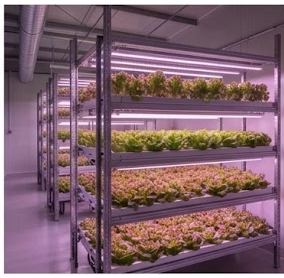
Light Spectrum Strategies for Each Growth Stage
Light Spectrum Strategies for Each Growth Stage
- Germination & Seedling Stage
Goal: Promote seed germination, cultivate sturdy seedlings with short internodes and well-developed root systems, prevent legginess (“stretching”).
Core Spectra:
Blue Light: A high proportion of blue light is needed at this stage. Blue light effectively inhibits excessive elongation of seedling internodes, resulting in stocky, strong plants with thick stems and dark green leaves. This is crucial for subsequent healthy growth.
Red Light: Provides necessary energy for photosynthesis, but the proportionshould not be too high, as it can easily cause legginess.
Spectral Ratio Suggestion: High Blue, Moderate Red. e.g., Blue:Red ratio between 3:1 and 5:1.
- Vegetative Growth Stage
Goal: Promote rapid and healthy growth of stems, leaves, and roots; establish a strong vegetative body.
Core Spectra:
Blue Light: Still very important. Continues to maintain compact plant structure, promotes chlorophyll synthesis, and leads to thick, lush green leaves.
Red Light: Provides massive energy to drive rapid growth.
Broad-Spectrum White Light: Full-spectrum light (like sunlight, high-quality LED grow lights), containing blue, green, red, and other spectra, is optimal as it most comprehensively meets the plant’s growth needs.
Spectral Ratio Suggestion: Balanced Blue and Red. e.g., Blue:Red ratio between 1:1 and 1:2. Adequate green light at this stage also helps lower leaves within the canopy perform photosynthesis.
- Flowering & Fruiting Stage
Goal: Induce flower bud differentiation, promote flowering, improve fruit set, promote fruit expansion and sugar accumulation.
Core Spectra:
Red Light: The absolute protagonist of this stage. A high proportion of red light is the most effective signal for promoting flowering. It accelerates the photoperiod response, stimulates flower bud formation, and provides tremendous energy for fruit development.
Far-Red Light: The ratio to red light (R:FR) is critical. Appropriate far-red light can regulate flowering time and optimize plant structure. However, too much can cause excessive stem elongation.
Blue Light: A certain amount of blue light is still needed to maintain plant health and prevent premature aging, but the proportion can be reduced.
Spectral Ratio Suggestion: High Red, Low Blue. e.g., Blue:Red ratio between 1:3 and 1:5 or higher. Many flowering-specific grow lights add deep red (660nm) and a small amount of far-red (730nm).
- Quality Enhancement Stage (Typically during fruit ripening or pre-harvest)
Goal: Improve fruit flavor, sweetness, color, and enhance active compounds in medicinal plants.
Core Spectra:
Ultraviolet (UV-B): Low-dose UV-B exposure can act as a “stress” to stimulate plants to produce more defensive compounds, such as anthocyanins (which deepen fruit color), flavonoids, and polyphenols, thereby enhancing flavor, color, and nutritional quality.
Deep Blue and Far-Red Light: Have also been shown to influence the synthesis of secondary metabolites.
Application: Commonly used for final quality shaping in fruits like grapes, strawberries, tomatoes, and medicinal plants like cannabis. Dosage and timing must be strictly controlled to prevent damage.