Beyond the Sun: Why Plant Grow Lights Are Essential for Modern Greenhouse Production
How LED technology is transforming greenhouses from seasonal shelters into year-round production powerhouses.
For centuries, greenhouses have served as a protective shield for plants, guarding against frost, wind, and pests. However, even the most advanced polycarbonate or glass structure has one fundamental limitation: it cannot create sunlight.
As we face increasing climate unpredictability, greenhouse growers are turning to a revolutionary solution that is reshaping modern agriculture—artificial plant grow lights. No longer a niche tool for researchers, LED grow lights have become a critical component for commercial viability and high-quality production.
Here is why integrating plant grow lights into your greenhouse operation is no longer just an option, but a necessity.
- Combatting the “Weak Light Stress” of winter
The biggest challenge for greenhouse growers in temperate regions is the winter season. Shorter days and lower solar angles mean your plants enter a state of “light starvation.” This leads to physiological disorders such as leaf yellowing, fruit drop, and significantly delayed harvests.
Research has demonstrated that targeted LED lighting can completely reverse this phenomenon. For instance, studies on strawberries grown in greenhouses during the winter showed that LED lighting not only increased yields but also advanced the harvest date by approximately 10 days. In early spring or late autumn, just a few hours of supplemental lighting can prevent the “empty growth” that plagues winter crops.
- Beyond Illumination: The Science of “Photomorphogenesis”
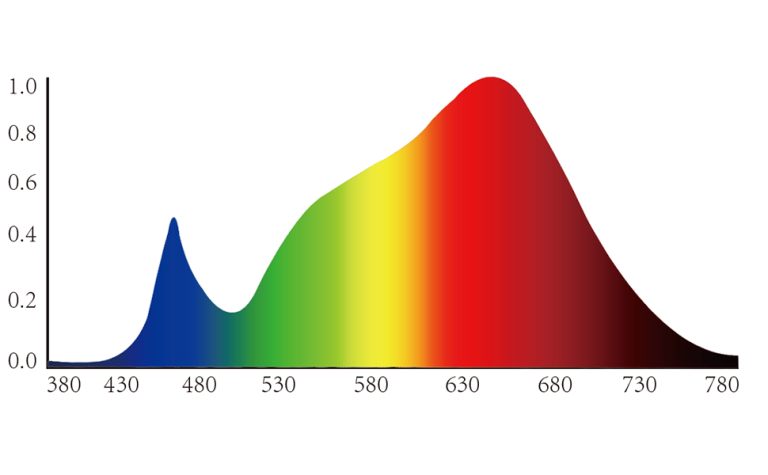
To a plant, light is not just energy; it is information. Plants have specific photoreceptors that respond to different wavelengths (colors) of light, a process known as photomorphogenesis. This is where modern LED technology surpasses the sun.
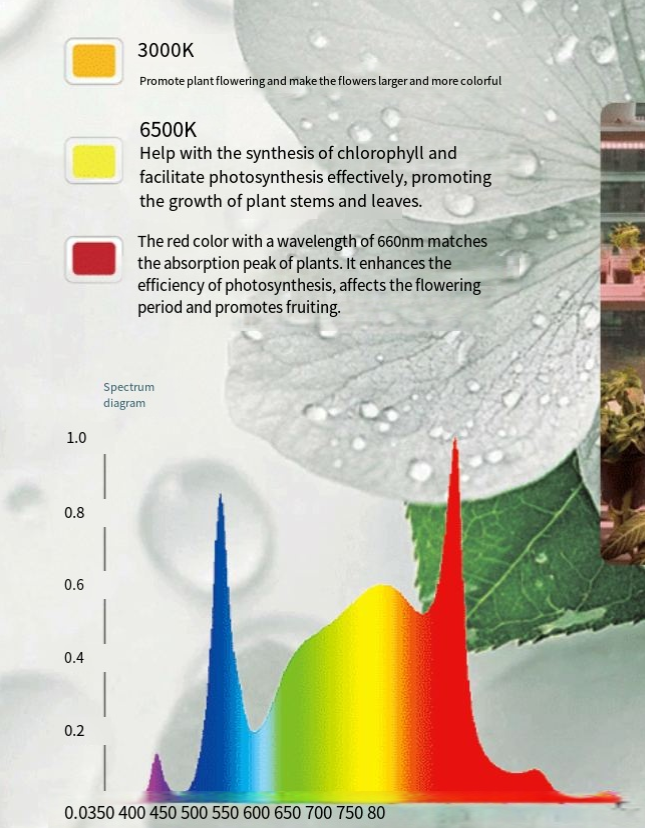
- Red Light (660nm): Crucial for flowering and fruiting. Studies show that supplemental lighting with a high ratio of red light can increase strawberry yields by over 55%.
- Blue Light (450nm): Regulates stomatal opening and promotes strong, compact vegetative growth, preventing seedlings from becoming “leggy.”
- **Far-Red Light (730nm): Known as the “Emerson effect,” it works synergistically with red light to boost photosynthetic efficiency and can trigger flowering in long-day plants.
By using a targeted “light recipe,” growers can now influence not just how fast a plant grows, but its nutritional content, flavor, and even coloration .
- The Economic Reality: ROI and “Off-Season” Premiums
The decision to install grow lights is often driven by simple economics. In regions like Northern China and Northern Europe, the intensity of natural light during winter is insufficient for high-value crops like tomatoes and cucumbers.
Take the example of tomato production in greenhouses. By utilizing high-intensity LED top-lighting (delivering up to 375 μmol/m²/s), growers have successfully achieved winter tomato yields that match their summer production levels. This allows them to supply the market with high-Brix, flavorful tomatoes during the winter months when prices are at a premium.
Furthermore, data from strawberry cooperatives shows that while the initial investment in lighting infrastructure might seem daunting, the operational cost is surprisingly low. For many growers, the daily electricity cost for running LED lights is negligible compared to the revenue generated from the additional 30-40% yield and the “off-season” price advantage.
- Quality over Quantity: Improving Crop Traits
Yield is important, but quality sells. Supplemental lighting improves the internal structure of the plant. In vegetable seedlings, for example, light increases the stem diameter and leaf thickness, creating a “Healthy Seedling” that is more resistant to transplant shock and disease.
In fruiting crops like sweet peppers and tomatoes, consistent light levels prevent issues like blossom end rot and irregular ripening. By maintaining a high Daily Light Integral (DLI) through artificial means, the fruit achieves uniform size and superior taste.
- Dynamic Lighting: The Future is Intelligent
The days of simply turning lights on and off are over. The latest advancements involve dynamic lighting. Instead of blasting a static spectrum for 12 hours straight, modern systems use sensors and control software to interact with the environment.
For instance, if a cloud passes over the greenhouse, the system instantly compensates by ramping up the artificial light intensity to maintain a constant photosynthetic photon flux density (PPFD). This prevents plant stress caused by fluctuating light levels.
Moreover, research into “dynamic lighting strategies” has shown that varying the light intensity to maintain a constant photosynthetic photon flux density (PPFD). This prevents plant stress caused by fluctuating light levels.
Moreover, research into “dynamic lighting strategies” has shown that varying the light intensity and spectrum throughout the day can lead to a 2.6-fold increase in energy use efficiency compared to traditional continuous lighting methods.
- The Vertical Dimension: Sterilization and Space Efficiency
In propagation houses and plant factories attached to greenhouses, lights are essential for multilayer cultivation. By using LED modules, growers can propagate seedlings on racks, effectively doubling or tripling their production capacity without expanding their land footprint.
Additionally, the slight heat emitted by LEDs (when placed correctly) helps to warm the plant micro-environment, reducing air humidity around the foliage. This micro-climate effect naturally suppresses fungal diseases, reducing the reliance on chemical pesticides.
Conclusion
The greenhouse industry is entering a new era defined by precision agriculture. Plant grow lights are the catalyst for this transformation. They empower growers to take control of their environment, turning a passive structure into an active growth engine.
Whether you are growing heirloom tomatoes, delicate strawberries, or leafy greens, investing in a high-quality LED lighting system is an investment in consistency, quality, and profitability.
The sun will always rise, but with modern plant lights, you decide how much your crop benefits from it.